
Sex Offender Checks in Alameda County
The California Department of Justice is the public source for Alameda County sex offender records. Its California Megan's Law Website covers the state and lets a reader narrow a search to Alameda County, a city, a ZIP Code, an address area, or a registrant name. Alameda County does not maintain a separate public registry that replaces this statewide source. Local police agencies receive registrations and supply updates, while DOJ controls what the public website displays.
Begin with enough detail to tell similar names apart. A known name is useful, but a place-based search can show disclosed registrations near a home, school route, park, or other point relevant to a safety plan. Search Oakland, Fremont, Hayward, another Alameda County city, or the county as a whole. Read each profile carefully because an address-level result and a ZIP-level result carry different statutory meaning. The registry is a public-notification record, not a complete case file or a full criminal-history report.
How Alameda County Registry Updates Travel
California's official Megan's Law service description says law enforcement updates the database daily. A person subject to registration generally gives required information to the law enforcement agency where that person lives. In Alameda County, that may mean the sheriff or a city police department based on the residence. DOJ then publishes only the subset that Penal Code section 290.46 makes public.
The update chain helps explain why a recent move may not look the way a reader expects. The Alameda County agency gathers and verifies registration data, the state system receives the update, and the public portal applies disclosure rules. A concern about possible noncompliance should go to the Alameda County law enforcement agency with local jurisdiction, not to neighbors or social media. The public map is a notice tool; the agency record remains the operational source for registration compliance.
Note: Daily database updating does not mean every public profile displays every address or every part of a registrant's history.
How to Search the California Megan's Law Website
The search begins with a legal disclaimer. Accepting it matters because California limits both what may be disclosed and how disclosed information may be used. The search controls then support a name route and several geographic routes. For an Alameda County search, a county filter provides broad coverage; city, ZIP Code, and address or map tools can narrow the area.
- Open the California Megan's Law Website and read the conditions of use before accepting the required acknowledgement.
- Choose a name search when a person is known, or use Alameda County, city, ZIP Code, or address and map controls for a place-based check.
- Compare the result list by photograph, aliases, physical description, birth date, and disclosed location instead of relying on a name alone.
- Open the matching profile and read the offense, address-display level, conviction or release year when available, and other registration details in context.
The available fields serve different questions. No single field is mandatory except the disclaimer acknowledgement, and the site may offer more than one way to define a geographic area.
| Field Label | Type | Required | Options / Format Notes |
|---|---|---|---|
| Name search | Text | No | Search by registrant name where available. |
| Address / map search | Address or radius | No | Supports geographic searching; map data comes through Google. |
| City | Text or dropdown | No | Use Oakland, Fremont, Hayward, or another Alameda County city. |
| ZIP Code | Text | No | Narrows results to a postal area. |
| County | Dropdown | No | Select Alameda County for countywide results. |
| Disclaimer acknowledgement | Acknowledgement | Yes | Must be accepted before entering search functions. |
The state search entry screen shows the disclaimer and search path before any Alameda County results appear.
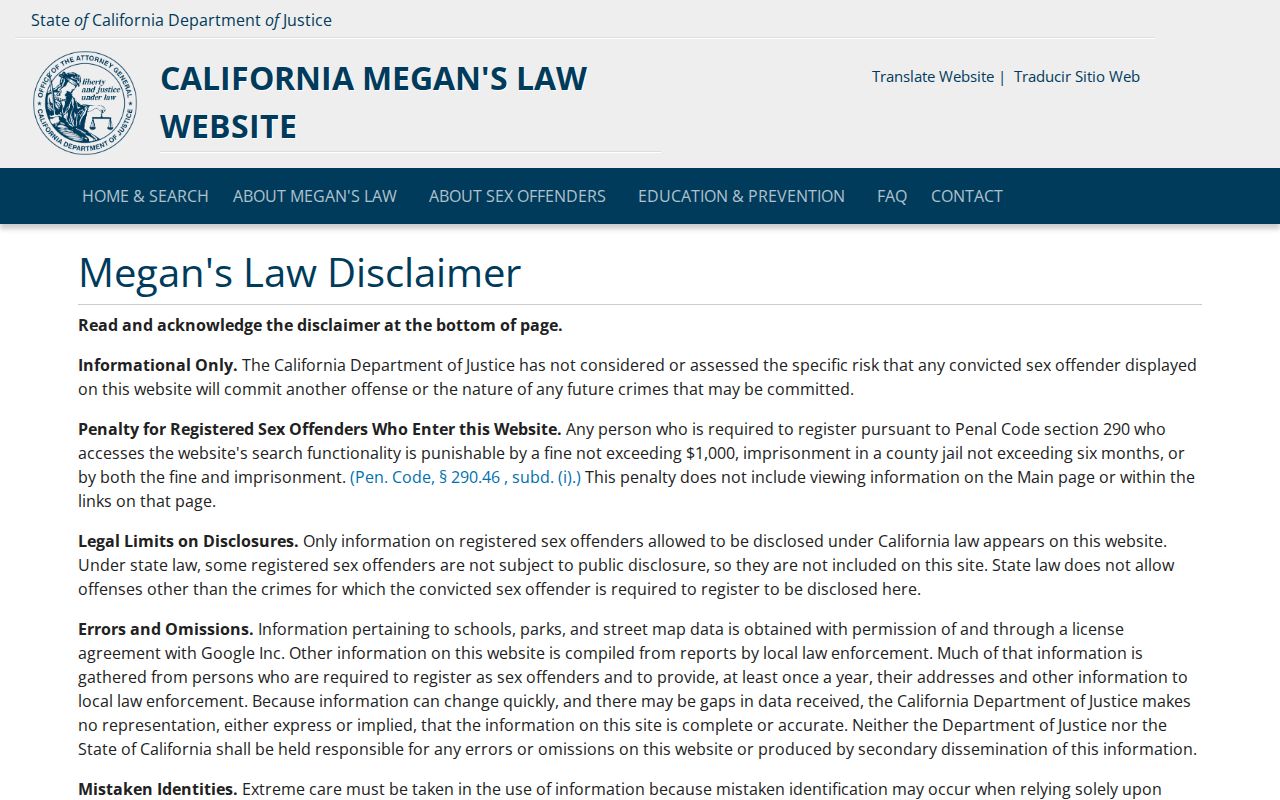
This official screen is the correct starting point for a public Alameda County registry search and its required lawful-use notice.
Why Alameda County Registry Addresses Differ
A missing street address does not prove that a profile is wrong. California law assigns different public display levels. Depending on the statutory category, the website may disclose an exact registered address or may identify only the community, ZIP Code, or county. Some registered people are not publicly displayed. Certain juvenile adjudication records also receive different treatment.
This is one of the main ways an Alameda County sex offender search can trip up a reader. The Alameda County map results do not contain every person with a registration duty, and a city-level marker is not the same as a pinpoint location. Penal Code section 290.46 controls those limits. It also excludes victim-identifying information, employer details, and criminal history unrelated to a registration offense. The absence of those fields reflects the law, not a promise that no other records exist.
Note: Use the profile's stated disclosure level when reading a location; do not infer a precise home from a ZIP or county listing.
Inside a Registry Profile
A public profile brings identity, location, and qualifying-offense details into one record. It can help distinguish people who share a name, but it remains narrower than an Alameda County court file. Year fields appear where available for listed offense categories, and a sexually violent predator adjudication may appear when applicable. The table separates the common profile elements from the limits built into public disclosure.
| Name & Aliases | The registered name and known aliases authorized for public display. |
|---|---|
| Photo & Physical Description | A photograph plus identifying traits that include gender and race. |
| Date of Birth | A date used with the photograph and description to distinguish similar names. |
| Registered Location | An exact address for specified categories or a community, ZIP Code, or county-level location for others. |
| Offense Information | Registration offenses, relevant statute information, and conviction or release year where available, not unrelated criminal history. |
| Special Adjudication | Prior sexually violent predator adjudication where that field applies. |
| Deliberate Exclusions | No victim identity or relationship, no employer name or address, and no unrelated offense history. |
For filed charges, court events, pleas, disposition, and sentence, use the Alameda Superior Court route described in the Alameda County criminal court cases resource. The two systems answer different questions.
When an Alameda County Registrant Moves
A California-only search can be too narrow when a person may have moved across state lines. The federal National Sex Offender Public Website at NSOPW.gov provides a multi-jurisdiction search layer. Start with the same identity facts used in the Alameda County result, then compare the destination jurisdiction's official record rather than assuming an old California location is current.
NSOPW is a routing layer, not a replacement for the California Megan's Law Website. States apply their own public-disclosure rules, so the fields and map detail can differ after a move. If a search suggests the person remains in Alameda County but required information appears stale, contact the Alameda County police agency or sheriff with jurisdiction over the reported residence. Give the agency the record facts and the reason for concern; do not attempt a personal compliance check.
California Registration Levels and Requirements
California's SB 384 framework uses tiers tied to minimum registration periods. Tier placement and public visibility are related but not identical: Penal Code section 290.46 still determines what the public sees. Local law enforcement handles registration duties in Alameda County, while the California Department of Justice maintains the state registry and publishes the authorized information.
| Level / Tier | Minimum Duration | Public Visibility |
|---|---|---|
| Tier 1 | 10 years | Generally the lower tier; display depends on Penal Code 290.46 categories. |
| Tier 2 | 20 years | Some information may appear at community, ZIP, or county level rather than by exact address. |
| Tier 3 | Lifetime | Includes categories with broader display; some risk-assessment-based cases have petition nuances. |
| Juvenile tiers | 5 or 10 years in some cases | Juvenile adjudication information is treated differently and may not appear publicly. |
The CA.gov registry service page explains the state's public-notification role and daily law-enforcement updates.
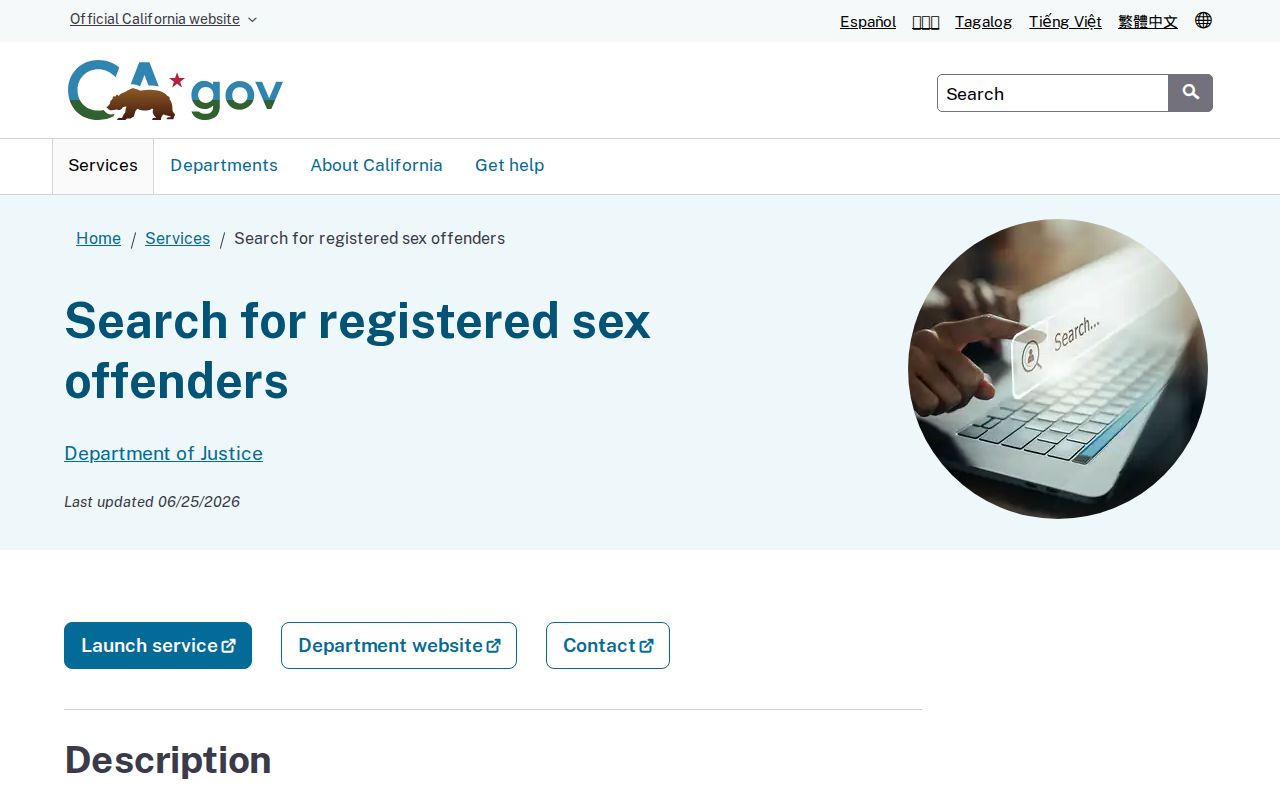
The state service summary connects Alameda County searches to California's official system rather than a private people-search product.
Alameda County PC 290 Registry Relief
A tier's minimum duration does not by itself remove a person from registration. California uses a petition process for eligible relief, and the details can turn on the registration record and case history. The Alameda County Public Defender's PC 290 Registration Relief page routes people seeking help to Alameda County Clean Slate at cleanslate.acgov.org or to Clean Slate staff at (510) 268-7400.
The California DOJ also maintains the official sex offender registration and exclusion forms, including material related to registration, exclusions, and SB 384 tiering.
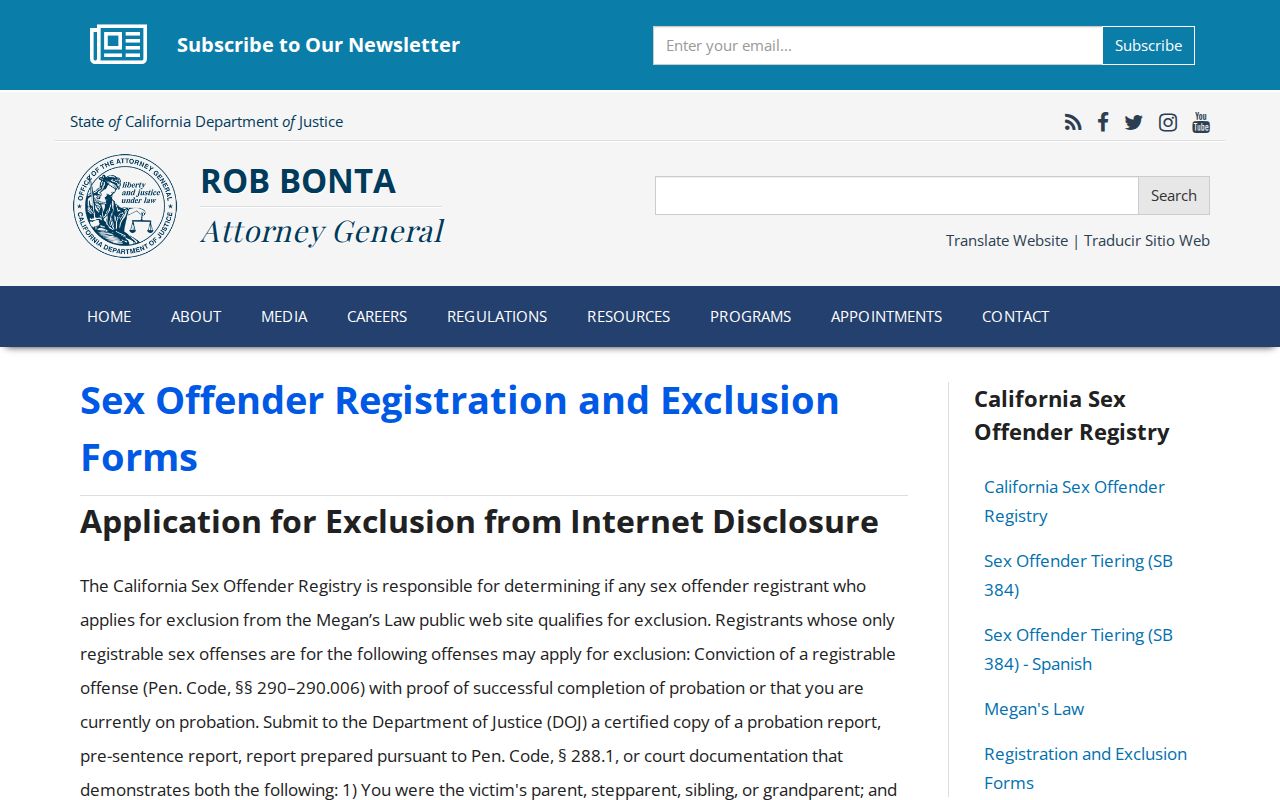
These state forms show why a public search result and a legal request for registration relief are separate processes with different records and decision makers.
Note: Clean Slate is the researched Alameda County help channel; eligibility and petition outcomes depend on the person's specific legal record.
Report Alameda County Registry Noncompliance
When an Alameda County profile suggests an outdated location or another possible registration problem, report the concern to the law enforcement agency that covers the listed residence. Oakland, Fremont, and Hayward residents ordinarily route local concerns to their city police agency; the Alameda County Sheriff's Office serves its own jurisdiction, including county areas outside those city departments. The exact registration desk hours were not found in the project research, so confirm the correct unit through the agency's official contact channel.
Share the public profile details, the location at issue, and the specific mismatch you observed. Let trained Alameda County personnel check the registration record. Do not approach the registrant, enter private property, organize a confrontation, or publish an unverified claim. If the concern involves an immediate threat, use the emergency channel; a routine data concern belongs with the responsible Alameda County agency. This keeps Alameda County registry reporting focused on public safety and gives law enforcement facts it can verify.
Community Notification and Lawful Use
California makes Alameda County registry information public to help protect a person at risk. That purpose supports practical steps such as reviewing an Alameda County neighborhood, discussing age-appropriate safety rules with family, or giving law enforcement a concrete compliance concern. It does not authorize harassment, threats, intimidation, vigilantism, or discrimination. The website disclaimer and the statute apply before a user enters the search functions.
If the Alameda County registry information appears inconsistent, preserve the public record details and contact the agency with jurisdiction. Local law enforcement can assess registration compliance; DOJ manages the public website. Avoid reposting a profile with accusations that go beyond the official fields. A registry entry shows a legal registration record and limited qualifying-offense history, not every fact about the person or any new allegation.
Misuse can be a crime: California Penal Code section 290.46 limits use of registry information to protecting a person at risk. Harassment, threats, intimidation, discrimination, or other unlawful misuse may lead to criminal or civil consequences. A registrant who enters the site's search functions can face up to a $1,000 fine, up to six months in county jail, or both.